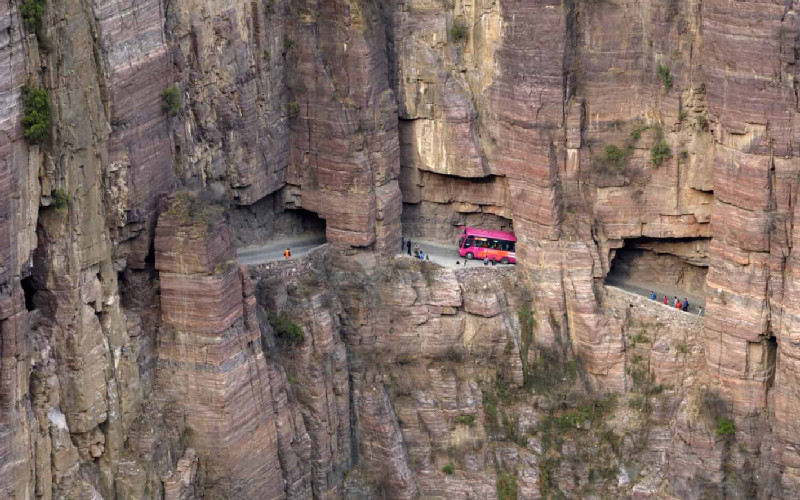
Building a road to reach a previously virtually unreachable village seems admirable. But the resulting Guoliang Tunnel Road to the village of Guoliang is also very dangerous. The construction itself was also dangerous, as it took five years and plenty of explosives to create the road.
Part of the danger of this road comes from its construction. No one is sure how structurally sound it is. That is concerning, given that it is 600 meters at its tallest point and just 3.5 meters wide. It is also only 5.4 meters high. For some perspective, this means that two cars can barely pass each other. The road spans 0.75 miles (1.2 kilometers). In addition to questions about its structural soundness, the area is at risk of natural hazards. There are no lights or guardrails. The area is prone to rockfalls and has plenty of trenches. This area is also prone to mudslides, extreme fog, and general slippery conditions.
Ancient architecture has been a topic of wonder to humanity, and it never fails to amaze us. It makes us curious about the origin of humankind and their lifestyle in prehistoric times. The past stories are astonishing to hear, but little do we know about the real secrets that reside within the withered facades of ancient buildings. Many things are left to be discovered, and many facts are not well known to the majority of the population. Here are some interesting facts about the Architecture marvels of the Ancient world.