2Arles Amphitheatre — France
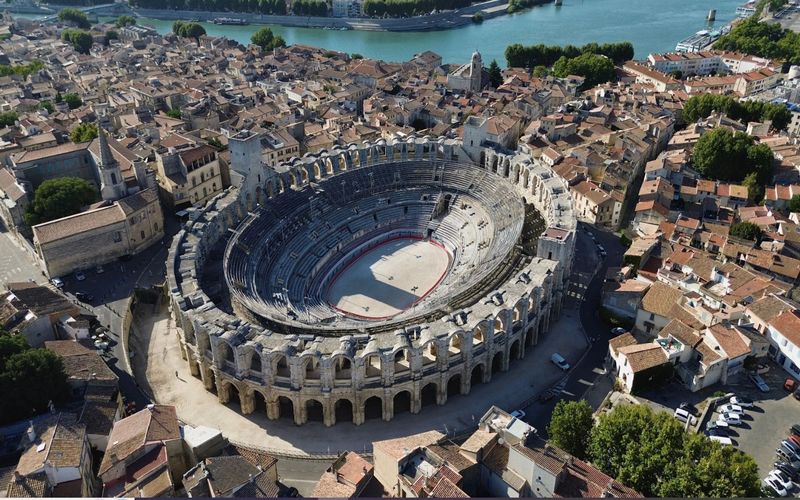
In southern France, the amphitheater of Arles offers a remarkable example of how Roman monuments can remain woven into living urban life.
Built in the first century AD, the arena dominates the historic center of Arles. Its exterior retains the familiar rhythm of Roman arches, while the interior preserves the powerful geometry that made amphitheaters so effective as public spaces.
What makes Arles especially fascinating is how the monument evolved over time. During the Middle Ages, it was transformed into a fortified settlement. Houses and defensive towers were added within its walls, turning the former arena into a small community. Later restoration revealed the Roman structure again.
That long continuity gives Arles unusual historical depth. The amphitheater is not simply an ancient ruin preserved in isolation. It has remained part of urban life for centuries.
The city itself is also rich in atmosphere. Narrow streets, shaded squares, Roman remains, and Provençal character make it highly walkable and deeply appealing. It is also closely associated with Vincent van Gogh, whose time there added another cultural layer to the city’s identity.
For travelers who enjoy seeing ancient history embedded in living cities, Arles is especially memorable.