6 Colosseum — Italy
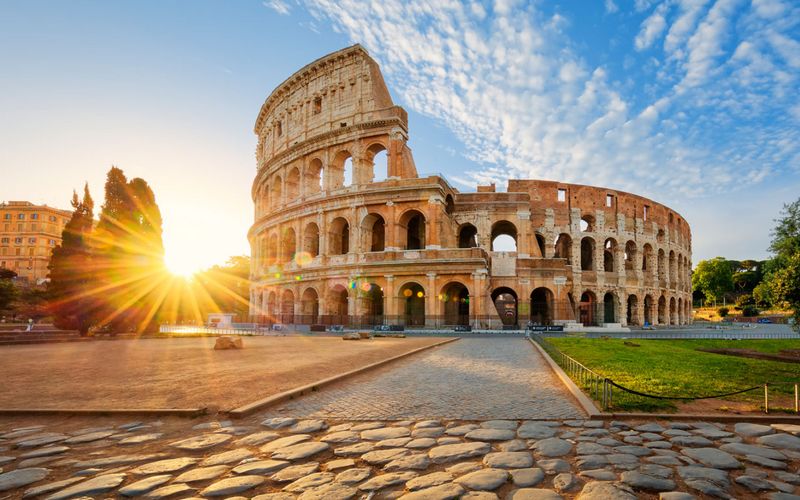
No list of Roman amphitheaters can begin anywhere else. Rising in the historic heart of Rome, the Colosseum remains one of the most recognizable monuments on earth and the greatest surviving symbol of imperial Roman architecture.
Construction began under Emperor Vespasian in the first century AD and was completed by his son Titus. At the time, it represented an extraordinary feat of engineering. The massive elliptical structure could hold tens of thousands of spectators and was designed to move large crowds efficiently through multiple entrances, corridors, and seating levels.
Its scale still feels astonishing. From outside, the layered arches immediately convey power and grandeur. Inside, the exposed underground chambers reveal the mechanics behind Roman spectacle. These subterranean passageways once housed scenery, animals, equipment, and performers before they emerged dramatically onto the arena floor.
What makes the Colosseum especially compelling is not only its fame but its setting. Around it lie some of the most important remains of ancient Rome: the Roman Forum, the Palatine Hill, and triumphal arches that once framed ceremonial processions. Visiting the Colosseum is therefore more than seeing a single monument. It is entering the political and ceremonial center of an empire.
Even for travelers who have seen countless photographs, the experience of standing inside it remains unforgettable.